 50
50 Pilot project
In 2023, Rivne region became a pilot region for the implementation of the project “Psychosocial Support in Ukraine” (PRO_MentalHealth), which was implemented by the International Solidarity Fund Representation in Ukraine in partnership with BGK, the European Commission and with the support of the Polish Development Cooperation Program of the Ministry of Foreign Affairs of the Republic of Poland. The Ministry of Social Policy of Ukraine and the Ministry for Veterans Affairs also joined the implementation. As part of this initiative, Psychosocial Support Centers were opened in each of the four districts of the region – in Zdolbunivska, Dubno, Sarno and Volodymyretska communities.
The purpose of creating the Centers is to help Ukrainian society overcome the consequences of the war and provide support to various categories of the population, but primarily to military personnel, participants in hostilities, families of deceased or missing fighters, and internally displaced persons.
The PRO_MentalHealth model, according to which the Centers for Psychosocial Support in communities are created, is based on several fundamental principles:
- sustainability of the functioning of the created centers – ensuring the long-term operation of the centers regardless of external circumstances;
- a wide range of services – providing comprehensive assistance in accordance with the needs of recipients (psychological, informational, physical and sports rehabilitation, consultations of social work specialists, legal assistance and career counseling);
- accessibility at the local level – services are as close as possible to the place of residence of people who need them. Services are provided on an outpatient and mobile basis (through the arrival of mobile teams of specialists to settlements remote from the Center within the community and/or district);
- high quality of services – compliance with professional standards, staff training and monitoring of effectiveness;
ecosystem of interaction – close cooperation between regional and local institutions, which ensures the integrity and sustainability of support.
Within the framework of the project, four communities received financial and methodological support for the creation and establishment of the Centers: renovation of premises and purchase of equipment, a car for mobile teams, training of specialists, and in the first half of the year of operation – financing of the needs for ensuring salaries, and then grants were provided for the development of new services, thanks to which the centers were able to provide services within the district, and not only within the community, during the formation period.
As the head of the direction “Psychosocial program Pro_MentalHealth: psychological rehabilitation and social adaptation of veterans and persons affected by the war in Ukraine” of the International Solidarity Fund Representative Office in Ukraine, Tetyana Siryk, said, from the very beginning of their creation, the Centers provided services in the field of mental health (psychological and psychiatric consultations) and information services with the aim of promoting the Centers and overcoming the stigma regarding receiving psychological help.
However, taking into account the requests and suggestions received from service recipients, the range of functions of the Centers has expanded: now it also includes physical education and sports rehabilitation, consultations with social work specialists, legal assistance, and career counseling.
Each Center is staffed by a multidisciplinary team of specialists: a psychologist, psychiatrist, social worker, physical therapist, and lawyer.
Starting in 2024, the Centers have been maintained at the expense of local budgets or have attracted funding for the remuneration of specialists through state programs of the Ministry of Social Policy, Family, and Unity of Ukraine and the Ministry of Veterans Affairs of Ukraine.
“The creation of Centers for Psychosocial Support is important not only for providing professional assistance, but also for overcoming stereotypes that still exist in society. This is especially noticeable in rural communities, where people often avoid visits to a psychologist or psychiatrist for fear of judgment. Therefore, the activities of the Centers’ specialists and our program as a whole are aimed at gradually destroying these prejudices and creating truly effective assistance in communities in different regions of Ukraine,” noted Tetyana Siryk.
“We managed to reduce stigma”: results of two years of work
Among the greatest successes of the Centers in the Rivne region, their leaders call the formation of permanent mutual aid groups, in particular on the “peer-to-peer” principle, expanding access to services in remote communities, professional development of the Center’s specialists, as well as reducing the level of stigmatization and stereotypes that exist in society.
“As the Center’s manager, I consider our greatest achievement to be the formation of permanent mutual aid groups, in particular on the “peer-to-peer” principle, from among our main target audience – families of missing persons, veterans, families of deceased Defenders. In addition, I believe that the psychologists of our Center have grown significantly as specialists who have mastered various techniques and have strong experience in working with various types of trauma. Another of our achievements is the reduction of stigma. It is felt more in rural areas than in the city. In two years, we have felt that there are positive changes: people speak the language of psychologists, are not afraid to come and talk about their experience working with a psychologist. Of course, there is still a lot of work to do, especially with residents of remote villages. But the positive dynamics are already visible today,” said Roman Shvets, manager of the Center for Psychosocial Support of the Volodymyretsk Settlement Center of Social Services.
In the Rivne Center (located in the city of Zdolbuniv), among the most significant results of work over the past two years are also called expanding access to services in remote communities and establishing effective partnerships:
“With the support of the International Solidarity Fund Representative Office in Ukraine, we created a branch in the Mizotsk community, the mobile team of which has provided over 200 services to residents of remote settlements in two years. In addition, we have introduced the provision of legal services: during this time, our visitors have received 224 individual consultations on legal issues. And, of course, among our results is the conclusion of partnership agreements on cooperation with local governments and public organizations, which strengthens our Center and allows us to work more effectively,” said Olga Kukharchuk, head of the “Rivne District Center for Psychosocial Support” department of the Zdolbuniv territorial center of social services.
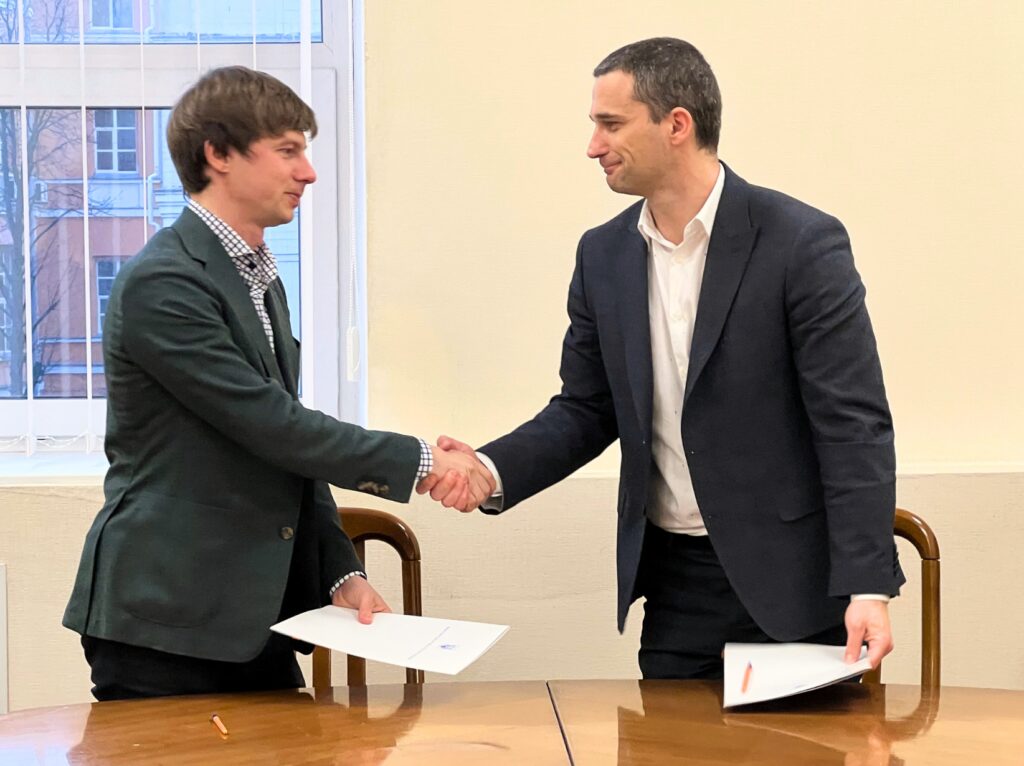
The Dubno Center also scaled up its work: its team was able to organize the provision of psychosocial support in the Radyvylivka territorial community, and also signed memorandums of cooperation with military units to provide high-quality psychological assistance to servicemen and establish work on career counseling for veterans, combatants, internally displaced persons, and other vulnerable categories of the population.
“A new area of activity of our Center is career counseling, which allows us to provide support to those who have lost, want to change, or are looking for a new job or activity. Most often, we are approached with such questions by veterans, their family members, internally displaced persons, and participants in hostilities. The Center’s specialists also cooperate with people of related professions, for example, specialists from local government bodies, the Central Assistance Center, the police, medical institutions, social services, cultural institutions, the employment center, educational institutions, etc., in order to provide, on the one hand, the most accurate, professional support to our service recipients, and on the other hand, through such work and events for community residents, we raise the level of awareness about overcoming the traumatic consequences of war. By the way, our Center, among other things, is equipped with a space for psychological relief, which, using modern technologies, allows us to work with cognitive, emotional and behavioral processes in visitors and bodily sensations,” said Lyudmila Odvarko, head of the Center for Psychosocial Support of the Dubno City Center for Social Services.
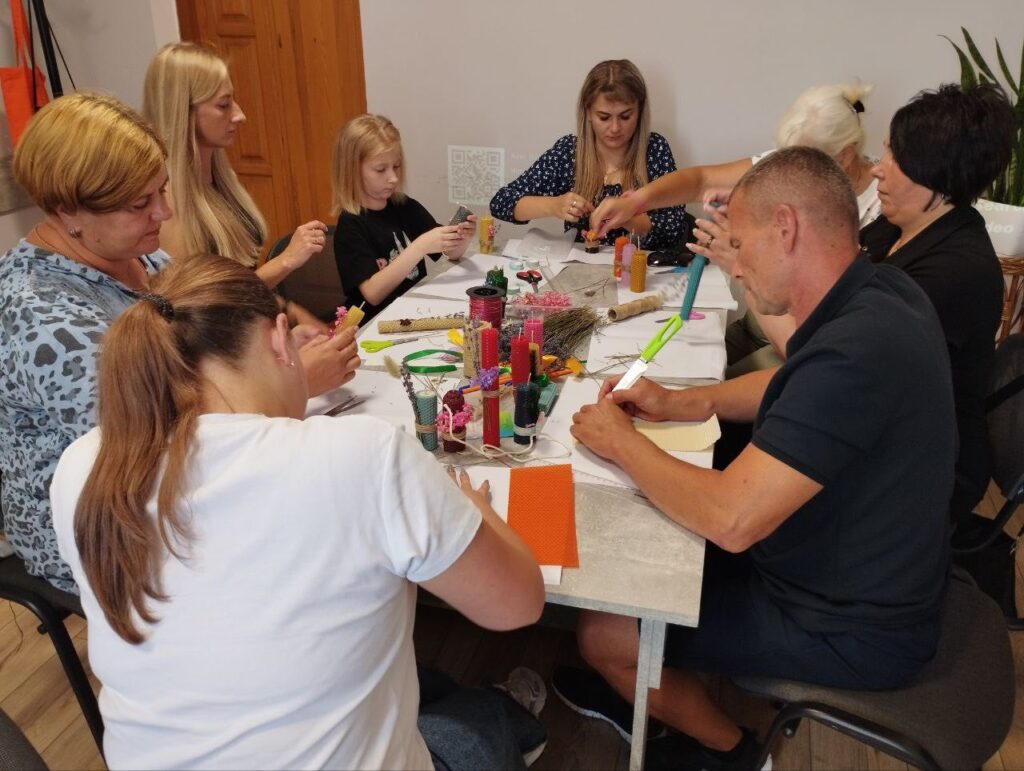
In Sarny, the local Center for Psychosocial Support is actively developing group work: currently, seven peer-to-peer psychological support groups are successfully operating here, as well as providing consultations for children and conducting psychoeducational activities for social professionals.
“Over the two years of operation, our Center has become a platform for comprehensive assistance, rehabilitation and integration, uniting specialists in psychology, psychiatry and physical rehabilitation. In fact, it is an important point of support for servicemen, veterans and their families. For the Sarny community, it has become a place that forms a culture of mutual assistance and trust between military and civilians, reduces the level of social tension, and contributes to the development of the mental resilience of the community as a whole,” says Oksana Skulovets, head of the Center.
Two years after the launch of the Centers, the teams recall that this path was quite difficult: at first, people often treated the work of psychologists with skepticism, some with caution or outright disregard. However, over the time that has passed, the attitude of community residents has changed radically, and most importantly, the level of stigmatization among those people who need support the most has decreased:
“I remember how one group of community residents came to us for training at the beginning of our work. They were skeptical of the Center, they made contact without enthusiasm. But gradually we were able to gain their trust, and now these people are not only our visitors, but also helpers and even friends. I think this is something to be proud of. It is nice to see the result of the work – giving up alcohol, reuniting families, integration processes that are quite actively ongoing in the community and which are clearly visible. I can say that our Center has become an integral part of the community’s society,” says Roman Shvets.
Every Center has such stories about supporting people, about timely assistance and overcoming difficulties together, although most of them are not public due to the specifics of the situations. However, managers are willing to share some of them: primarily in order to demonstrate successful examples of real life stories for those who are still hesitant to turn to specialists for help and advice.
“We are especially proud of the story of the soldier Igor, who after his service experienced the severe consequences of a traumatic experience. Thanks to the work with the Center’s psychologists, he gradually restored his emotional balance, was able to return to an active life and even began to help other veterans. This case is proof for us that timely support can be the key to new strength and resilience,” said Olga Kukharchuk.
The Sarny Center remembers with particular warmth the story of helping a woman whose son is in captivity: once she turned for support in a state of despair and psychological isolation, and today, thanks to the work of a psychologist and psychiatrist and her own efforts, she has become a facilitator of the “Living While Waiting” support group.
“Our specialists work a lot with the wives and mothers of the fallen Defenders. Of course, we cannot tell everything, but every example, every success, every step forward is our shared joy with them. Perhaps only those who have experienced such an experience can fully understand the meaning of these steps. Well, for us, each such story is an example of the fact that we are not working in vain,” explains Lyudmila Odvarko.
“I turned to the Center six months ago on the advice of an acquaintance. After demobilization, I felt unwell, let’s say. I had some problems. I came, started working with a psychologist. Slowly, gradually, we worked. It was conversations, drawings, and relaxation, for example, fishing. Little by little, we established contact with a psychologist, it finally helped me a lot. I don’t drink, I take the necessary medications. And, thank God, now I feel good. I didn’t go anywhere, I didn’t communicate before. Now everything has changed, there are no stresses in the morning, as there were. It was terrible, I can’t even explain how it is, but I wouldn’t wish it on anyone. And now it has let go, as they say. I would highly recommend going to the Center, to psychologists, to people like me. “It really helps,” shared M., a veteran who visits one of the Centers in the Rivne region, his own experience.
N., whose son died in the war, also told her story:
“At the Center, I found not only support from specialists, psychologists, but also from women and girls like me. We can freely talk about our pain, our loss, not be ashamed and be sure that we will understand each other like no one else. Over time, I realized how important it is to be among our own. We help each other as best we can. When you are left alone with yourself, with your troubles, you don’t know what to do. I didn’t sleep, I didn’t eat, I cried a lot, I could walk down the road and cry, and I couldn’t calm down. The psychologist at the Center suggested methods to calm myself down, balance myself, and cope when there is no psychologist or doctor around, for example, if a panic attack begins. Such advice is very useful for me. “I trust the Center’s specialists, and therefore, whenever I meet wives and mothers who are going through the same thing as me, I always advise them to seek help,” says N.
Veteran Ihor spoke about the help he received at the Rivne Center:
“I remember when the Center’s specialists first visited my home, I didn’t know what to expect. They told me about the Center and the services available there, and asked if I needed help. At that moment, I had a question that I couldn’t solve on my own, and their support turned out to be very appropriate. After that, I turned to the specialists several more times, and so I decided to regularly visit the Center. I received psychological and informational support here, as well as simple human conversation, which is very important to me. The most valuable thing for me is that they listened to me and understood me. After the visits, I began to feel more confident in myself. I understood that problems can be solved step by step. I would sincerely recommend the Center to veterans and their families. Here they help not only with psychological issues, but also with everyday difficulties, and they tell me where to turn. “And I would also like to have a place where veterans could gather, communicate, discuss their problems and find ways to solve them. It would be great to create a support group specifically for veterans, for example, once a week. This would allow not only to get advice, but also to feel the real support of fellow veterans,” he said.
Plans and Scaling
Each Center is developing in its own way: having basic areas of work and appropriate equipment, each one moves forward in accordance with the requests and needs of service recipients.
Last year, the Volodymyretsky Center introduced a physical education and health rehabilitation service, created a space with exercise equipment, and hired a veteran coach, so the team’s immediate plans are to further equip the physical education and health space and activate adaptive sports in the community. Funds for this project have already been allocated by the International Solidarity Fund Representative Office. This year, the Sarny Center will create a family room to develop child-parent relationships, expand support groups for military families and older women, and plan to deepen work on the topic of indefinite loss. In addition, with the support of the Fund Representative Office, they will work on expanding the range of physical education and sports rehabilitation activities. Also in the future, by the end of the year, there will be a veteran hub, where the main focus will be family therapy to strengthen child-parent relationships and preserve families, and the Center is also going to support veteran initiatives, business ideas, and social activities. The Rivne Center, based in Zdolbuniv, has set up a mobile brigade for remote communities and created self-help groups for wives of military personnel, missing persons, teenagers, and junior high school students to reach more people with such support formats, reducing their isolation and improving their mental health. With the funds of a mini-grant from the Representative Office this year, they plan to open a new direction here — physical education and sports rehabilitation, to help veterans and people with disabilities restore physical health.
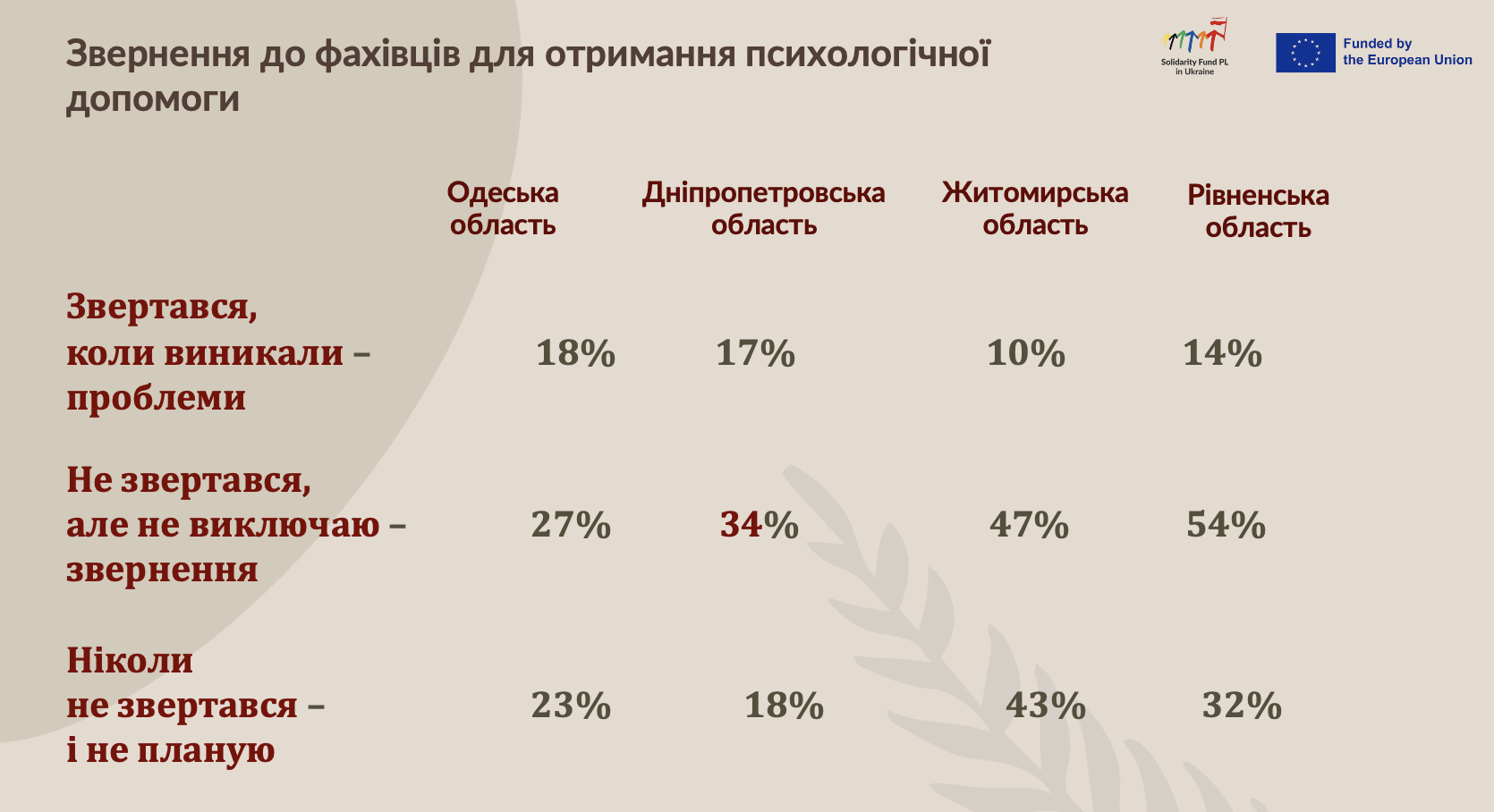
In Dubno community, the premises will be renovated at the expense of the local budget, and thanks to the assistance of the International Solidarity Fund Representative Office, the necessary equipment for physical culture and sports rehabilitation will be purchased. Given the successes and requests of service recipients in four Centers for Psychosocial Support, the International Solidarity Fund Representative Office began implementing the PRO_Mental_Health model tested in the Rivne region in Zhytomyr region in October 2024. In July of this year, four communities were selected on a competitive basis: Korostyshivska, Ovrutska, Olevska, and Berdychivska. Centers have already been created in them, and teams of specialists/staff have begun training in order to soon begin work on providing assistance in various areas. At the end of August, each Center received a car from the Representative Office to provide services in remote settlements of the communities. In addition, the competition for communities in Dnipropetrovsk and Odessa regions is currently being completed: in these regions, four communities are also planned to be selected, where Psychosocial Support Centers will be created according to the PRO_MentalHealth model.
“A model that works must be scalable. This is a response to the demand of society. Where there is a need, there should be such a Center. By 2030, we have big plans – to create 100 such centers throughout Ukraine. But it should be noted that we are not just creating centers, we are creating a network of resilience and mutual assistance,” said Monika Oluv, head of the PRO_MentalHealth psychosocial program portfolio.
The project is implemented with the financial support of the Polish Development Cooperation Program of the Ministry of Foreign Affairs of the Republic of Poland.